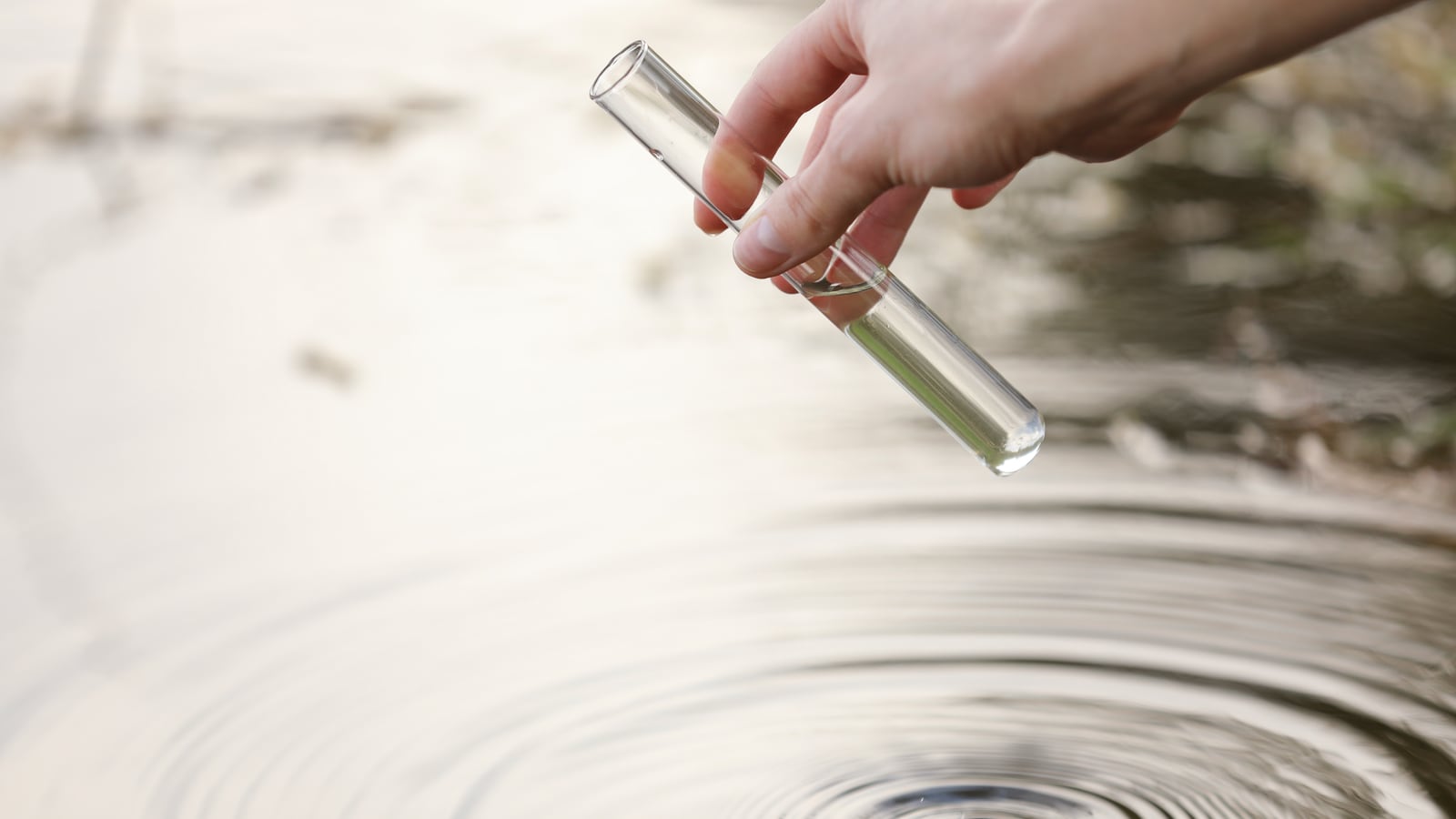
Well water can differ from one property to another and can also change during the year. Depth, geology, rainfall, the condition of the wellhead, nearby septic systems or agricultural activity, storage tanks and internal plumbing can all influence what eventually reaches a tap. Choosing treatment from a photograph, the taste of the water or a quick meter reading therefore leaves important questions unanswered.
The more reliable path starts with a representative sample and a clearly defined use. If the water will be used for drinking or food preparation, testing must make it possible to compare the result with applicable requirements. If the objective is irrigation, cleaning or equipment protection, different parameters and limits may be relevant. In either case, treatment should respond to measured concerns and then be checked through follow-up testing.
This guide explains what to document before requesting a well-water treatment proposal in Panama. It does not declare any source potable or replace sampling by a competent laboratory, a site assessment or directions from the health authority.
Appearance, taste and conductivity do not prove potability
Clear, odorless water can contain microorganisms or dissolved substances that are not visible. At the same time, an unusual color, odor or taste may be a reason to investigate, but it does not identify the cause or its level by itself. Sensory observations help describe a concern; they cannot replace laboratory results.
The same is true of a portable conductivity or total-dissolved-solids meter. In a 2025 notice about well water, Panama’s Ministry of Health explained that conductivity and total-dissolved-solids readings do not determine potability or identify microorganisms. The notice says water quality is determined through physical, chemical and bacteriological analyses in specialized laboratories, and that confirmation comes from official laboratories using scientifically validated methods.
Conductivity is useful information: it indicates how readily water carries an electrical current and relates to the amount of dissolved ions. Two samples with similar readings, however, may contain different substances. A low number does not rule out microbiological contamination, and a high number does not automatically identify the compound present. Decisions require specific parameters, units, methods and comparison criteria.
First describe the well, its surroundings and the water’s use
The testing plan begins before the bottle is opened. Prepare a record of the well and the complete system. Where the information is available, include:
- the location, age, depth, construction, cap, wellhead and visible condition of the well;
- pumps, pipes, storage tanks and any treatment already installed;
- the distance and relationship to septic systems, animal pens, crops, fuels, workshops, drainage or flood-prone ground;
- changes after heavy rain, during the dry season, following repairs, after periods of nonuse or as the water level varies;
- intended uses, number of users, daily demand and peak-demand periods.
This information helps determine what to test and where to collect samples. A sample taken directly from the well helps characterize the source; another from the tank, treatment outlet or a tap may reveal changes introduced by storage, treatment or internal plumbing. Combining those locations without identifying them can obscure where a problem begins.
A recent example shows why findings should not be generalized. In 2025, MINSA reported on its assessment of several private wells in Chitré: physicochemical and microbiological studies led to different source-specific decisions, including closure of one well. That action concerned those wells during that specific contingency; it does not determine the condition of another well.
What microbiological testing contributes
Microbiological testing looks for signals that a visual inspection cannot confirm. Total coliforms are used as indicators of microbiological condition and possible failures in source protection, the system or sampling. Fecal coliforms and E. coli provide more specific information about possible fecal contamination. An indicator result is not the same as identifying every microorganism that might be present.
Parameter selection should reflect the use, surroundings and local direction. As educational guidance for private wells, the U.S. Centers for Disease Control and Prevention recommends testing at least annually for total coliforms, nitrates, total dissolved solids and pH, while also investigating risks relevant to the location. That frequency and its references to certified laboratories belong to the U.S. system; in Panama, the plan should be confirmed with the relevant local authority and qualified professionals.
Collection procedure matters. The bottle, disinfection of the sampling point, flushing time, preservation, temperature and delivery window can affect the usefulness of the result. Follow the laboratory’s instructions exactly and record the date, time, point and conditions. An unexpected finding may call for a confirmation sample and a sanitary review of the well, not merely the immediate purchase of equipment.
What physical and chemical testing contributes
Physical and chemical parameters describe different characteristics. In Panama, Technical Regulation DGNTI-COPANIT 21-2019 and its 2021 amendment, as listed by ASEP, are national references for drinking-water definitions and general requirements. The framework addresses physical, chemical, biological and radiological categories, along with sampling and analytical methods. It supports water-quality assessment; it does not make a technology or brand suitable for every source or automatically turn sampling frequencies for service providers into a rule for every private well.
An initial panel may include turbidity, pH, conductivity or total dissolved solids, and other parameters identified by the laboratory and the site risk. Hardness, iron or manganese may relate to scale, staining or operation. Nitrates and nitrites require specific measurements; they cannot be inferred from the water’s appearance. Chlorides, metals, pesticides, hydrocarbons or other compounds may be relevant depending on local geology and nearby activities.
There is no short list that fits every well. A laboratory or qualified professional should help turn the site inventory into an appropriate panel. The report should also state the method used, reporting limit and requirement against which each number is interpreted. “Within range” has little value if the range, use and applicable standard are not identified.
How to establish a useful baseline
One sample is a snapshot in time. It may be sufficient to detect a signal that requires action, but it will not necessarily describe all variation in the source. Additional samples may be needed when conditions differ substantially between dry and rainy seasons, or after an event such as flooding, a repair or intrusion.
Before installing treatment, keep:
- the complete original report, not only a screenshot of the values;
- the exact sampling point and the intended use of the water;
- the date, recent conditions and any treatment operating during collection;
- methods, units, reporting limits and laboratory observations;
- a record of flow, pressure, daily demand and storage capacity.
This baseline allows proposals to be compared against the same information. It also helps separate a water-quality objective from an operational one. Reducing scale to protect plumbing, for example, is not the same as addressing a microbiological finding, and improving odor does not demonstrate that a chemical concentration has been corrected.
Treatment should follow the measured finding
Each technology has a function and operating conditions. Protecting the well, managing drainage and correcting a damaged cap or pipe may be as important as equipment. Treatment stages can then be selected from the results:
- Turbidity and suspended solids: these may require separation, settling or filtration sized for particle load and size.
- Adsorbable compounds, odor or taste: selected media, such as activated carbon, may suit defined objectives, subject to capacity and replacement limits.
- Hardness or specific ions: these may lead to an assessment of softening, ion exchange, membranes or another targeted process, depending on the substance and concentration.
- Microbiological concerns: these may require sanitary corrections, pretreatment and a disinfection stage compatible with actual turbidity, flow and operating conditions.
- Several concerns at once: these may call for a treatment train, with barriers arranged so one stage protects the next.
For a broader comparison, see how to choose water filters in Panama and the guide to reverse osmosis, filtration and UV. The central principle is the same: a commercial label alone does not demonstrate that a system addresses the measured concern.
What a 2018 local evaluation teaches—and what it does not show
The 2018 article by Camarena and colleagues in Revista Científica Guacamaya documented an evaluation at one well on the Veraguas campus of the Technological University of Panama. The study collected samples before and after the system during three weekly rounds and analyzed total- and fecal-coliform indicators.
That design provides a local example of before-and-after comparison for the parameters studied. It also shows why scope must be stated carefully: it involved one well, three rounds and two indicator groups. The authors themselves recommended collecting more samples at different locations.
The article does not establish current operation of the equipment or site, nor does it grant regulatory endorsement, authorization or certification. It also does not demonstrate universal performance, results for every pathogen, virus or chemical substance, or results for every source or condition. Capacity figures in different sections of the document are inconsistent, so they are not used here to specify a current flow.
Retest after installation and throughout operation
Installation does not complete the assessment. After commissioning, collect samples at points that make it possible to compare inlet and outlet results for the parameters that prompted treatment. If internal plumbing or the storage tank is also part of the risk, include points that help evaluate those parts of the system.
A result that meets a requirement on one date does not guarantee that the source will remain unchanged. Define a monitoring plan based on risk, instructions from the authority, seasonal changes and system maintenance. Record media replacement, cleaning, disinfection, pressure, flow and any alarm or deviation.
Repeat or expand testing after a flood, repair, prolonged period of nonuse, persistent change in color, odor or taste, or a change in nearby conditions. If a follow-up result misses the objective, stop making assumptions about the treatment and review the source, sampling, operation and design before correcting it.
What to do when contamination is suspected or an emergency occurs
If contamination is suspected, temporarily use a source that the competent authority considers safe and request situation-specific instructions. The CDC guidance on treating well water says that after identified contamination has been treated, the water should be tested again before use. It also makes clear that no single type of household treatment protects against every problem.
Boiling may be a temporary measure for microorganisms when directed by the authority, but it does not remove chemical contaminants. Do not improvise disinfectant doses or assume that an existing filter covers a new situation. After flooding or another event, follow MINSA and laboratory notices because the type of risk determines the response.
A responsible well-water proposal begins with the report, site and intended use. Ice Innova Panama can review that information to identify missing data and the stages worth evaluating. If you already have recent results, request a technical review; include the sampling point and date, but do not send sensitive personal information.
Sources and scope
This article uses Technical Regulation DGNTI-COPANIT 21-2019 and its 2021 amendment, together with MINSA notices, as Panamanian references; the CDC guidance is presented only as educational context for private wells in the United States. The Camarena and colleagues evaluation is cited as a 2018 study of one well, with three weekly rounds and only total- and fecal-coliform indicators. This content does not declare any source potable or replace sampling, laboratory interpretation or directions from the competent authority.